
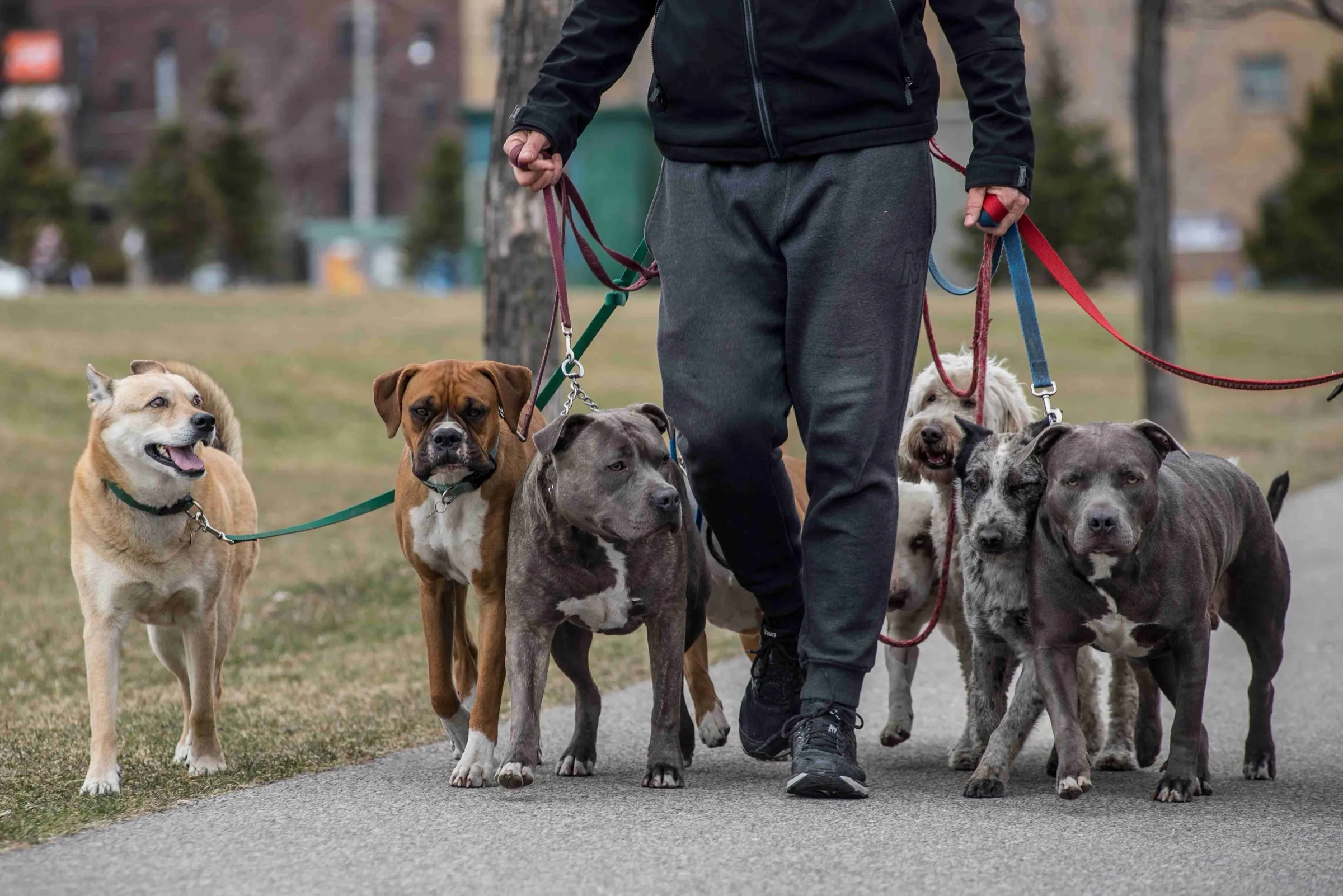
Almost everything I do with a dog starts here. Not with sit. Not with treats. With the walk — because it is the one thing you already do every single day, and it is where nearly every problem either gets built or gets solved.
What A Structured Walk Actually Is
Through the leash we are teaching rules and expectations. We are teaching observation, and we are teaching restraint. We are making it clear that you are the one making the choices and the decisions — while keeping all of the love and trust you already have with your dog.
What you end up with is a dog travelling alongside you in a zone. It is aware of everything happening around it, but it is not reacting to any of it and it is not chasing every thought that arrives. You are both aware of each other, and there is no intensity in it. It is genuinely enjoyable, for you and for the dog.
That is different from a dog that is simply being held back. Fighting tension with tension is what most owners are doing, and it makes everything worse. We are not restraining a dog that wants to explode. We are showing it there is nothing to explode about.
One Hour Is Worth Three
Dogs can comfortably walk three to five times faster than we can. So when your dog drags you down the street, it is not really misbehaving — it is moving at its own pace while you act as an anchor.
When you instead ask your dog to move at our slow human pace, allow it to look at whatever it likes without escalating, and make all of the decisions yourself, something useful happens. One properly structured hour is worth roughly three hours off leash. You get a dog that is tired psychologically as well as physically.
That distinction matters more than people expect. If you were lucky enough to run your dog on trails for three to five hours a day, you would have a dog that is exhausted physically and completely unchanged mentally. You would just be attending life alongside it. Physical exercise on its own does not settle a mind, and it does not build respect.
“We are not restraining a dog that wants to explode. We are showing it there is nothing to explode about.”
It Sets Up The Whole Day
A structured walk sets the precedent for everything that follows. You get home and your dog is content to nap — which is what dogs should be doing roughly 80% of the day, and puppies closer to 90%.
Then when your dog wakes and struggles to settle, something else has changed too. Because you have made it clear that you are the one making decisions, and because there is now genuine respect there, your vocal warnings finally mean something. A simple no, or stop, or enough — which is essentially our version of a growl — actually works.
Before that respect exists, those same words are noise. Most dogs understand them perfectly well. They simply do not care.
The gear that makes this easier
Training starts on a slip lead. Here is what Mark actually uses in sessions, what he skips, and the honest answer to “isn’t that cruel?”
Equipment Mark usesThe Order Most People Have Backwards
The usual pattern is affection first, excitement encouraged, exercise somewhere near the bottom of the list. That is putting our needs ahead of the dog's.
Turn it around: exercise first, then leadership — and by leadership I do not mean harsh discipline, ever, and never anything meant to intimidate or hurt. I mean helping your dog settle enough to process that whatever it was working itself up about was unnecessary. The affection is not going anywhere. It just stops being the thing that creates the problem.
Where It Goes From Here
Once the leash work is solid, it travels. The same behaviour carries into your house, the elevator, the hallway, your car, the backyard, the cottage — anywhere you go.
Eventually it carries off leash as well. It is not unlike your parents holding your hand near traffic when you were small, so you did not run into the road, follow a stranger, or pick something up off the ground. Nobody holds your hand now. The behaviour was built while they did.
A dog that walks well on leash will stay close off leash, stay in that same calm state, and come back when called — because it respects you, not because it is afraid of you. And when you release it to go and investigate something, it can do that too, and still return.
Why This Comes First
People often want to start with the specific problem — the barking, the lunging, the separation anxiety, the aggression at the door. I understand why. But those are symptoms of a relationship where nobody is clearly making decisions, and the walk is the fastest, clearest place to change that.
Get the walk right and most of the list gets shorter on its own.