
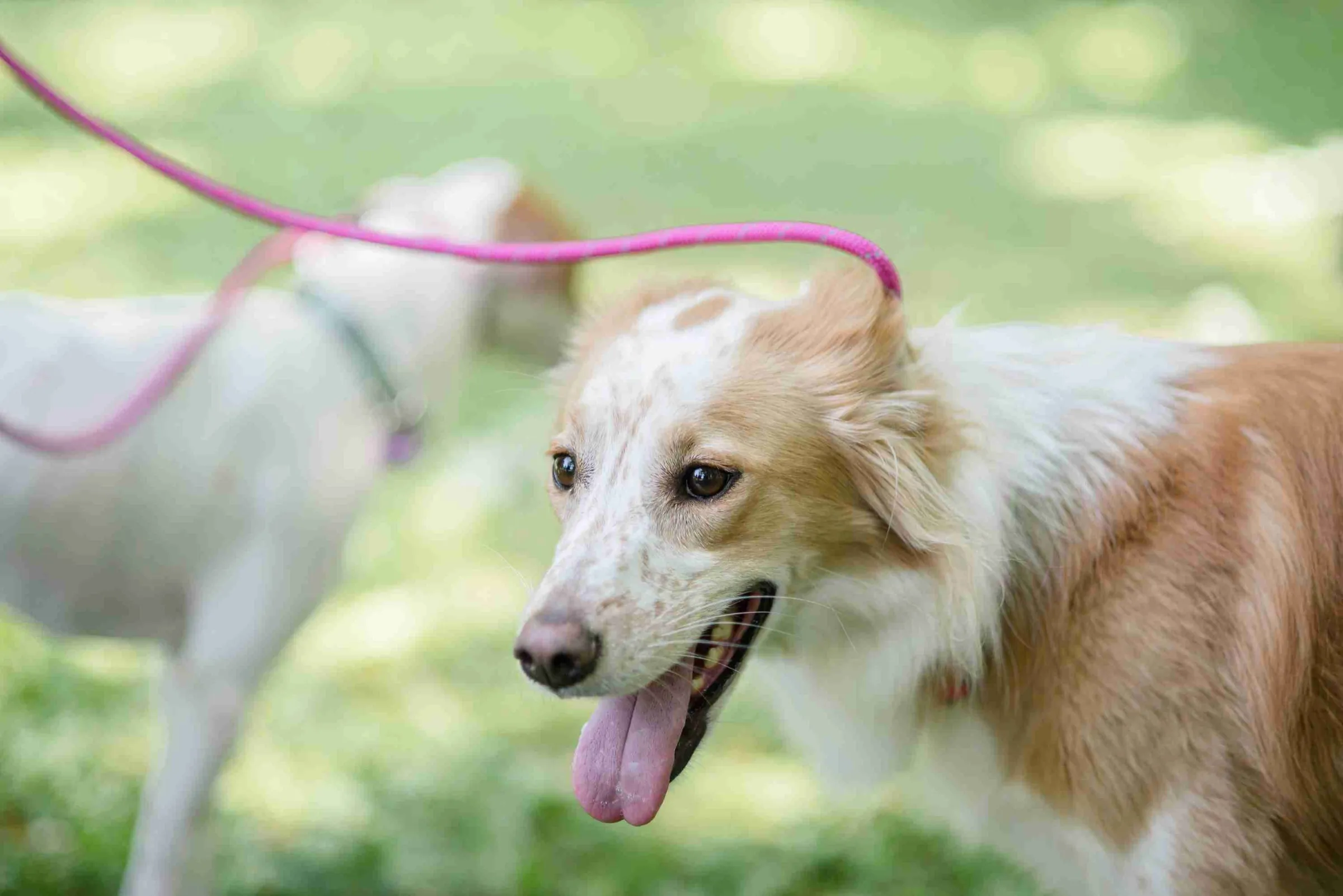
Standard Harnesses
A harness that clips at the back is designed, essentially, to let a dog pull comfortably. That is not a criticism of the product — it is what the design does. Your dog will not get hurt, which is genuinely nice. But you will be dragged around, you will be uncomfortable, and you will not have any real control.
No-Pull And Front-Clip Harnesses
These clip at the front or the side and are sold as the easy-walk solution. In most cases what they actually do is create internal damage to the chest and the shoulders over time, which has been studied, and they still do not change the behaviour.
That is the pattern worth noticing across most of this equipment: the pulling gets suppressed mechanically, and the dog's mind never changes. Take the harness off and you have the same dog you started with.
Head Halters — Halti, Gentle Leader
Dogs generally hate these, because they are functionally similar to a muzzle. You will not hear the choking and hacking you get with a flat collar, since nothing is tightening around the throat — but the dog is still straining into it. That creates internal damage to the neck over time, and you are still fighting your dog physically rather than changing anything.
Flat Collars And Martingales
Anything sitting around the neck that a dog can lean into does much the same thing. The dog strains, you brace, and the pressure is constant and undirected. You get internal damage and an unchanged dog.
What I Use, And Why
A slip lead or a prong collar, used properly, gives you a way to communicate continuously with your dog — so your energy and your intention finally make sense to them through something physical.
I want to be very direct about what proper use means, because these are the tools people have the strongest feelings about. The physical part is never to hurt and never to intimidate. We are essentially moving air. It is a snap, and then it is over — not a pull, and not a hold.
What that snap replicates is what dogs already do with one another. When one dog disagrees with another, it bites along the neck, between the ear and the jaw line. It is not an attack. It is a signal that says: I am serious, and I disagree with what you are doing. Because we are copying a signal your dog already understands, there is no confusion for the dog at all. The confusion is ours — unlearning the pull is the hardest part of this for most people.
“No piece of equipment trains a dog. The right tool lets you communicate clearly and the wrong tool guarantees you cannot.”
“But Isn’t That Cruel?”
Look at any dog show. Almost every dog in the ring is wearing a slip lead — from two-pound chihuahuas to two-hundred-pound mastiffs, with pit bulls, rottweilers and everything else in between. The handler is controlling them with a finger and a thumb.
That is the whole point. It was never about physical force. The physical part is only there to deliver a signal; what you are actually working on is psychological. You do need that physical element to get there, but you are never, ever hurting the dog.
I am vegan. I would be the worst vegan on the planet if I were hurting dogs and calling it training.
There is a related confusion worth clearing up. When dogs assert themselves with each other, people often read it as aggression. It usually is not. Assertion is calm and controlled; aggression is imbalanced and neurotic. When I am being assertive with your dog, I am calmly disagreeing — which is a very different thing from being aggressive with it.
A Note On Intensity
Occasionally you have to go harder. What surprises people is that the dog does not notice a physical difference, because there genuinely is not much of one. What the dog notices is that your energy and your intention have intensified — and that is what dogs actually pay attention to, ahead of body language and well ahead of words.
Think of a door you open the same way every day. One morning it sticks, so you push harder and it opens. Nobody got angry at the door. You matched what the situation needed and moved on. That is all any of this ever is.
The Honest Summary
No piece of equipment trains a dog. The right tool lets you communicate clearly and the wrong tool guarantees you cannot — but a slip lead in the hands of someone pulling and holding is just another way to fight with your dog.
That is why I would rather show you the technique in person than sell you a product. Timing and how you hold the leash are absolutely critical. Without them you will struggle indefinitely with whatever is clipped to your dog's neck.